
Components
Sterlite Tech’s shaky Q2 signals challenges ahead amid global demand contraction
STL grapples with declining revenues and profitability despite a temporary rise in quarterly sales


Mumbai: Why, in a world ruled by the invisible hands of technology, do tech giants stumble through uneven financial terrain? Despite their omnipresence in our lives, tech companies often hit the rocks at least once each fiscal year—and Sterlite Technologies Limited (STL) is no exception. For STL, a powerhouse in optical and digital solutions, Q2 FY25 exposed more than just numbers. Faced with contracting demand, squeezed margins, and a fading grip on last year’s benchmarks, STL’s latest performance tells a tale of turbulence that reveals just how volatile the road to digital dominance can be.
STL reported consolidated revenues of Rs 1,413 crore for the quarter ending 30 September 2024, a 16 per cent increase from the previous quarter. This growth, however, fails to mask the underlying challenges. Compared to the same quarter last year, revenues have slid by 5.4 per cent, down from Rs 1,494 crore in Q2 FY24. This revenue dip reflects broader market contractions, especially in STL’s core optical fibre cable (OFC) and optical connectivity (OC) businesses, which have been grappling with supply chain constraints and price pressures globally.
In financial performance, STL’s EBITDA reached Rs 151 crore, marking a 63 per cent QoQ increase. However, this positive quarter-over-quarter rise sharply contrasts with the year-over-year trend, as EBITDA plummeted by 30 per cent from Rs 216 crore in Q2 FY24. STL’s EBITDA margin now stands at 10.7 per cent, a steep decline from 14.4 per cent last year, signalling weakened profitability across its core sectors.
The optical networking division, historically the backbone of STL’s business, continues to struggle. OFC volumes have decreased on an annual basis, underscoring the persistent demand softness that has plagued the company’s market segments. A more concerning aspect is the drop in Optical Connectivity attach rates from prior peaks, weakening STL’s market positioning. The segment generated Rs 1,027 crore in revenue this quarter, a reduction of 5.3 per cent YoY, despite modest QoQ growth. EBITDA margins within this segment also fell to 12.9 per cent, compared to 19.4 per cent in the same period last year, driven by higher operational costs and reduced OFC sales volumes.
Moreover, STL’s digital services division faced hurdles, with quarterly revenue declining to Rs 64 crore from Rs 78 crore YoY, reflecting a 17.9 per cent decrease. Losses within the digital business narrowed slightly, yet the unit continues to operate at a deficit, posting an EBITDA loss of Rs 15 crore.

Despite its revenue decline, STL achieved several key client acquisitions, securing projects in the US and UK, including a new partnership with Netomnia. However, these wins are tempered by STL’s broader market contraction and reduced OFC demand worldwide, as highlighted by a projected global market growth of only 4.3 per cent CAGR from 2022 to 2028. Although STL’s management expresses optimism for demand recovery, these short-term volume reductions underscore systemic weaknesses.
The company’s recent financials have cast doubt over its ability to maintain the growth trajectory seen in prior years. With H1 FY25 net losses mounting to Rs 60 crore, STL’s debt profile has also become a point of concern. Net debt stood at Rs 2,169 crore at the end of H1 FY25, accompanied by a debt-to-equity ratio of 0.74. This leverage, coupled with reduced earnings, limits STL’s flexibility to navigate the industry’s tightening margins and escalating global competition.
As STL embarks on its demerger of the Global Services business, the separation process itself may introduce further operational complexities and transitional costs. Scheduled for completion by Q3 FY25, this demerger aims to bolster STL’s core focus on optical and digital solutions, yet the timing appears precarious given the present fiscal constraints.
For now, STL’s path to stability appears fraught with challenges. A combination of cost restructuring and a recalibrated growth strategy may be crucial if STL is to weather the industry’s cyclical headwinds and regain investor confidence in the coming quarters.




Components
CES 2026: LG Display stripes ahead with a gaming and design monitor that means business
The screen-maker cracks the code on razor-sharp OLED panels for gamers and graphic designers

SEOUL: In the eternal battle between gamers demanding lightning-fast refresh rates and professionals craving pixel-perfect clarity, LG Display reckons it has found détente. The South Korean display titan is unveiling the world’s first 27-inch 4K OLED monitor panel that marries an RGB stripe structure with a blistering 240Hz refresh rate—a combination previously thought incompatible, like oil and water or fashion and function.
The breakthrough lies in how the pixels are arranged. RGB stripe structure lines up red, green and blue subpixels in neat rows, banishing the colour bleeding and fringing that plague lesser screens when you park your nose close to the display. It is the difference between reading crisp text and squinting at a rainbow-tinged mess. OLED panels using this method existed before, but they topped out at a sluggish 60Hz—fine for spreadsheets, useless for fragging opponents in first-person shooters.
LG Display’s engineering wizardry changes the game. By cranking the refresh rate to 240Hz whilst maintaining that pristine RGB stripe layout, the company has produced a panel that works equally well for colour-critical design work and twitchy gaming sessions. Better still, the panel incorporates Dynamic Frequency & Resolution technology, letting users toggle between ultra-high-definition at 240Hz and full-HD at a frankly ludicrous 480Hz. That is fast enough to make your eyeballs sweat.
The specs are suitably impressive: 160 pixels per inch for exceptional detail, optimised performance for Windows and font-rendering engines, and colour accuracy that should please the Photoshop brigade. LG Display achieved this by boosting the aperture ratio—the percentage of each pixel that actually emits light—and applying what it coyly describes as “various new technologies.” Translation: years of R&D and probably some sleepless nights.
Existing high-end gaming OLED monitors have relied on RGWB structures (which add a white subpixel) or triangular RGB arrangements. Both work, but neither delivers the sharpness that professionals demand. LG Display’s new stripe pattern is tailored specifically for monitor use, a recognition that staring at a screen from two feet away demands different engineering than watching telly from across the room.
The company is betting big on this technology, targeting the high-end monitor market where it already commands roughly 30 per cent of global OLED panel production. Among gaming OLED panels in mass production, LG Display claims world-leading specs across refresh rate, response time and resolution—a trifecta that sounds like marketing bluster until you check the numbers.
“Technology is the foundation of leadership in the rapidly growing OLED monitor market,” says LG Display head of the large display business unit Lee Hyun-woo. He promises to keep pushing “differentiated technologies compared to competitors”—corporate-speak for staying ahead of Chinese rivals snapping at LG’s heels.
The new panel will debut at CES 2026 in Las Vegas, where LG Display plans to woo customers and expand its lineup. Initial rollout targets high-end gaming and professional monitors, the sweet spot where people actually pay premiums for superior screens rather than settling for whatever came with their laptop.
Whether this technology reshapes the monitor market or remains a niche luxury depends on two things: pricing and production scale. But for now, LG Display has pulled off something rare—a genuine technical leap that solves a real problem. Gamers get their speed, designers get their clarity, and LG gets bragging rights. In the cutthroat world of display tech, that counts as a win.
Components
Oppo sharpens its focus with Find X9 and India-first LUMO Lab
With a 200MP Hasselblad lens and India-first LUMO Lab, OPPO redefines phone photography.
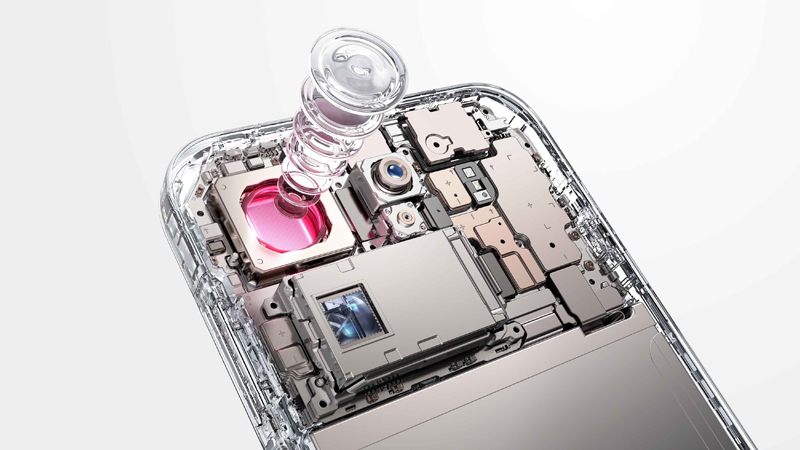
MUMBAI: Move over megapixels Oppo’s about to make every click a cinematic masterpiece. With the Find X9 Series launching in India on 18 November, the smartphone maker is training its lens squarely on the future of photography and this time, it’s not just about sharper images, but smarter storytelling.
The upcoming Oppo Find X9 Series is a heady mix of engineering and artistry: a 200MP Hasselblad telephoto camera, a true colour camera, and an all-new real-time Triple exposure HDR system promise to make light, texture, and tone dance in perfect sync. It’s Oppo’s boldest attempt yet to blur the line between a camera and a phone.
But the company isn’t just refining pixels, it’s localising perception. In a first-of-its-kind initiative, Oppo India has announced LUMO Lab, an exclusive Indian collaboration that pairs the brand’s imaging scientists with celebrated photographers Joseph Radhik, Ashik Aseem, and Zaid Salman. The goal? To capture India the way it truly looks vivid, emotional, and unfiltered.
“LUMO Lab embodies Oppo’s commitment to human-centric imaging,” said Oppo global imaging director Simon Liu. “We aim to understand India’s unique visual challenges and create technology that acts as a creative partner empowering photographers, creators, and everyday users to express themselves freely.”
At the heart of the Find X9 Pro lies the world’s first 200MP Hasselblad Telephoto Camera, built on a 1/1.56-inch sensor larger than the main cameras on most flagships. The lens delivers 13.2x lossless zoom and stretches to 120x hybrid zoom, ensuring your concert shots and faraway sunsets stay sharp enough to frame. With a f/2.1 aperture and a 10cm tele-macro focus, the camera turns even tiny subjects into towering portraits of detail.
Oppo’s Active Optical Alignment tech precisely calibrates every lens-to-sensor pair, boosting resolution by 15 per cent, the fine line between good and goosebump-worthy shots. Meanwhile, a new 28nm sensor architecture reduces power use by 25 per cent, keeping the phone cool during marathon recording sessions.
Forget ghosting and blown-out skies. The Find X9’s Real-Time Triple Exposure HDR captures three exposures bright, medium, and dark simultaneously, ensuring perfectly balanced photos with zero motion blur. It’s powered by a custom Sony LYT-828 sensor, making it the ideal companion for sunsets, backlit portraits, and concert lighting.
The Find X9 variant packs a slightly smaller LYT-808 sensor with f/1.6 aperture, but it captures 57 per cent more light than typical smartphone cameras, promising clarity even in dim conditions.
Most phones guess colours. The Find X9 Series measures them. Its True Colour Camera houses an 8-channel spectral sensor that analyses over 2 million spectral pixels across 48 zones of each frame. Whether it’s the amber of a Chennai dusk or the cool blue of Ladakh’s lakes, the result is lifelike hues and skin tones that stay true under any light.
In another world-first, the Find X9 Series captures full 50MP photos by default on all three rear cameras. That’s 4x the detail of standard 12MP images enough resolution to crop, print, and still retain stunning clarity. Smart Adaptive Clarity drops the resolution to 25MP or 12MP in low-light scenarios, balancing detail with efficiency.
Designed for the professionals and the passionate
Each lens in the Find X9 lineup has been engineered for excellence:
● 50MP ultra-wide camera with 120° field of view and autofocus for macro shots
● 50MP periscope telephoto on the Find X9 with 6x lossless zoom and 10cm tele-macro focus
● Hasselblad Portrait Mode and XPAN Mode for film-like tones and cinematic 65:24 frames
Professional videographers can shoot 4K Dolby Vision HDR on every lens, at 120fps, or record in LOG with ACES-certified colour profiles for precise post-production work. OPPO’s new vapor-chamber cooling system ensures stable performance even during long 4K shoots.
Driving all this hardware brilliance is the LUMO Image Engine Oppo’s new AI-powered processing suite. With 50 per cent less CPU use, 60 per cent less memory, and 50 per cent less power draw, LUMO handles denoising, colour reconstruction, tone balancing, and even motion prediction simultaneously.
It enables innovations like Lightning Snap, shooting 10 frames per second with near-zero blur, and 4K Motion Photos, which record a short 4K video clip alongside every still preserving the mood around the moment.
What makes the Find X9’s debut truly special is its grounding in Indian visual culture. Through LUMO Lab, Oppo is working to ensure its imaging understands the nuances of Indian skin tones, festivals, textiles, and light. It’s smartphone photography meeting sociology and that’s a frame worth capturing.
From the shimmer of a Diwali lamp to the grit of a Mumbai street, OPPO’s Find X9 Series isn’t just about pixels per inch, it’s about people per picture. And with LUMO Lab, it’s ensuring India’s stories are seen exactly as they’re meant to be: alive, textured, and real.
Components
Harman plugs Sound United acquisition; expands product portfolio
Premium brands like Bowers & Wilkins, Demon, Marantz get added to its offerings.

ONNECTICUT: Harman’s $350 million swoop for Sound United is a seismic play in the global audio rivalry, vaulting Samsung’s prized subsidiary to the very top of the premium audio hierarchy. Overnight, the deal delivers Harman an army of industry icons: Bowers & Wilkins, Denon, Marantz, Definitive Technology, Polk Audio, HEOS, Classé, and Boston Acoustics—all famed not just for pedigree or hi-fi bravado, but cult customer devotion across the globe.
Sound United’s arrival telescopes Harman’s reach across every lucrative audio battleground—home audio gear, amplifiers, AV receivers, headphones and automotive audio now all under a single, thundering umbrella. By merging marque names, Harman becomes master of a 21-brand constellation, boosting its chances to dominate both traditional and emerging markets—from living room soundscapes to next-gen connected cars and wearables.
Importantly, Sound United will run as a standalone strategic business unit, preserving each brand’s authenticity and loyal following even as it benefits from Harman’s vast distribution, R&D clout and Samsung’s global hardware ecosystem. The strategy: capitalise on fresh growth while leaving beloved products and sound signatures unspoiled, reassuring audiophile and casual buyers alike.
For Harman, the move is about more than scale; it’s about future-proofing. Plugging Sound United’s legendary R&D and boutique appeal into Harman’s tech and supply chains means a faster track to innovation—from smarter, immersive hi-fi systems to AI-driven sound and car audio.
“This is a bet on unmatched experience, quality and the next wave of audio technology,” says Harman lifestyle division president Dave Rogers.
Analysts predict the expanded Harman will use its new firepower to take on both established peers and disruptors, targeting a global audio market expected to pass $75 billion by the end of the decade. For consumers and audiophiles, it signals more choice, greater technology trickle-down, and the lasting power of classic brands standing tall—with a turbocharged engine behind them.


TEST
TEST


MIB sets OTT accessibility rules, mandates captions and audio description
Platforms get three years to add features for hearing and visually impaired


Boney Kapoor acquires remake rights of Tamil political satire Thalaivar Thambi Thalaimaiyil
Strong word-of-mouth turns Pongal satire into remake pick


Netflix India names Rekha Rane director of films and series marketing
Streaming giant bets on a seasoned marketer who helped build Amazon and Netflix into household names


Zabeen signs off from TV9 after shaping the network’s public voice
Communications leader exits after three years spanning MD office strategy and media outreach.


Dhawan steps up to bat for Delhi’s grassroots sports push
Cricket star named face of Delhi Khel Mahakumbh to fuel youth talent hunt.


Orient Beverages pops the fizz with steady Q3 gains and rising profits
Kolkata-based beverage maker reports stronger revenues and profits for December quarter.


Cheekatilo shines in the dark with record debut on Prime Video
A crime thriller steps out of the shadows as Telugu storytelling claims centre stage.


Checkmate Goes Digital as Chess Joins Esports Nations Cup 2026
From boards to bytes, chess readies for a nation-first showdown in Riyadh.


Washington Post CEO exits abruptly after newsroom cuts spark backlash
Leadership change follows layoffs, protests and a bruising battle over trust.


BCCL profit jumps 53 per cent in FY25 as tax bill shrinks
Revenue rises 4.3 per cent to Rs 10,209.33 crore while deferred tax gain lifts bottom line sharply


Zee Cine Awards 2026 set for fan-first celebration in Mumbai
Akshay Kumar and stars launch awards at NSCI Dome on Feb 28


JioStar absorbs IndiaCast to streamline distribution
Merger creates one-stop hub for content, digital, and delivery


Hamdard honours changemakers at Abdul Hameed awards
NEW DELHI: Hamdard Laboratories gathered a cross-section of India’s achievers in New Delhi on Friday, handing out the Hakeem Abdul...


Why the best campaigns today start with insights, not ideas
MUMBAI: For decades, creative storytelling has been the cornerstone of brand communication. The “big idea” amplified through catchy jingles, striking...
-
I&B Ministry4 months ago
MIB sets OTT accessibility rules, mandates captions and audio description
-

 News Headline5 months ago
From selfies to big bucks, India’s influencer economy explodes in 2025
-

 e-commerce5 months ago
Swiggy Instamart’s GOV surges 103 per cent year on year to Rs 7,938 crore
-
 MAM2 years ago
OpenAI joins C2PA steering committee
-
 Digital10 months ago
Squadstack AI helps Stage cut calls by 55 per cent and costs by 70 per cent
-
 News Headline1 year ago
TRAI puts a ‘stop’ to unsolicited calls and messages
-
 iWorld1 year ago
Kuku TV transforms India’s OTT space with vertical microdrama boom
-

 Brands4 months ago
Page Industries posts steady Q3 growth, declares Rs 125 interim dividend