
Ad Campaigns
‘India should become the next animation hub for the world market’: Ram Mohan-Utv Toon’s UTV Toon’s Ram Mohan and company COO Nandini Vaidyanathan

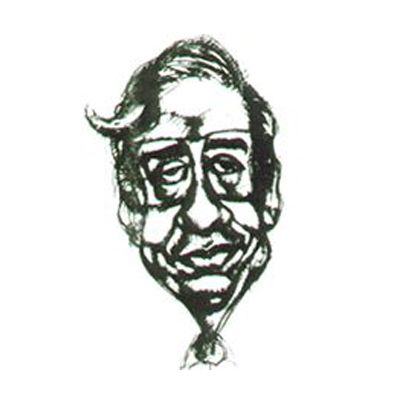
Ram Mohan has been drawing cartoons ever since he was in school. But it was a chance encounter with Clair H Weeks, veteran Disney animator, who was in Bombay in 1956 to help the government of India set up an animation studio, that led to a job in the cartoon film unit where he worked for the next 12 years and paved the way for his career in animation. There is arguably no one in the country today who compares in terms of wealth of experience in the field of animation.
Ram Mohan has made countless commercials, some children‘s films (including the White Elephant for Unesco), one animated feature, the Japanese production of The Legend of Ramayana (which he co-directed with Koichi Sasaki) and the Meena and Sara series for Unicef. He recently won the lifetime achievement award from the Advertising Club. This is the fourth such award he has won for his contribution to the field of animation.
| Nandini Vaidyanathan joined UTV Toons as COO in December 2000 with the brief to grow the company‘s 2D business in the world market. She joined UTV from Group 4 Securitas where she was executive director – strategic development, responsible for Southeast Asia and the Middle East. |
 |
Indiantelevision.com‘s Thomas Abraham recently met Ram Mohan, the creative inspiration behind UTV Toons, and Nandini Vaidyanathan to get an understanding about the potential animation had for India and where India‘s leading 2D animation company was headed.
You are one of the pioneers of animation in India and an institution in this field. What do you see is the future for animation in India?
RM: The Future of animation as we see is tremendous. It is an industry that is yet to happen here. India should become the next animation hub for the world market. It is not so much cheap labour, because strictly this business does not operate on the principles of a traditional labour market. It is more a quality producer stamp at affordable prices that makes India attractive.
The markets that we envisage for this business are television, motion pictures, games, web and e-learning. The basket of services we would offer is 2D Animation, 3-D animation, SFX, live action, CGA (computer generated animation) and web-based training.
What are the advantages India holds compared to other established cartoon content providing countries in Asia?
RM: Price is of course a major issue. Twenty years ago when western studios discovered Korea, Taiwan and Philippines, it was largely on account of quality animation available at affordable prices. Affordable being relative to what western studios were forking out back home. Today, India offers similar advantages.

Could you put some figures on that?
NV: In India an average cartoon episode costs between $30,000 to $40,000. Besides, our output is as good as any in terms of quality. Similar episodic work in the Philippines would cost between $90,000 and $100,000 while in Korea and Taiwan it would cost between $110,000 and $120,000. There is Japan which is the most mature market in Asia as far as animation goes but there the costs are the same if not more than the US.
 |
Any other advantages? |
But aren‘t we coming back to the sweatshop principle? How can you sustain quality in these conditions?
NV: We have had no problems attracting good people. We have our training school downstairs, which offers training in all streams of animation. The training‘s free, and we also have a system whereby we absorb the best performers ourselves. We make heavy investments in each of them. And Rs 10,000 on an average for a fresher is a decent salary.
How has the downturn in the market affected you? There has been talk that you‘ve downsized your workforce?
NV: That is not true. As part of the animation industry, we‘ve not been affected by the ICE meltdown. We have 452 people on board, who work in four shifts and we expect that number to go up to 650 by year-end. In fact, our calendar is booked till 2003 so there is certainly no dearth of work on our plate.
The competition is slowly heating up in India. There is Toonz Animation in Thiruvananthapuram, Pentamedia in Chennai and Crest in Mumbai that immediately come to mind. Where do you stand?
NV: At least in the 2D segment, there is no one who can touch us in India. And we don‘t see that changing for the next few years. If there is any area where we are not that strong it is in 3D animation though we do a lot of ad commercials. But no one is anywhere near acquiring a portfolio as big as ours or matching our range of services in media and entertainment.
| What are the major projects you have on hand? NV: UTV Toons has signed up for a $68-million slate series with Funbag International Studios to produce three series every year for the next three years, starting July. Each series will have 26 episodes of 23-minute duration each. We have also signed an agreement to produce an animated special for Street Kids International, one of the leading international NGOs. Then there is the long-standing relationship Mr Ram Mohan has developed with Unicef since 1992. We are handling the complete production of the Meena and Sara series for Unicef. Meena is the story of the travails of a girl child born in Asia and Sara is the story of a South African teenager addressing issues such as teenage pregnancy and Aids. |
|

How big is the world animation market and what part of that business is coming to India? NV: It is difficult to make a clear estimate on that but the industry generates somewhere in the region of $ 10 billion a year in business. Of this barely 5 per cent is coming to India so it is a market, which is still to be properly tapped.
What sort of revenues is UTV Toons looking at?
NV: Last year we had revenues of Rs 15 million. This year the projected revenues are in the region of Rs 100 million. But actual value is much higher. About Rs 210 million because all the agreements we are signing are part cash and part rights so there are royalties also which have to be factored in.
What about work in India?
NV: Most of our work in India is in advertising. But the market is pretty dull overall so we are not doing as much work now as before. Last year the break-up of our business was 70 per cent in episodic work and 30 per cent in advertising. This year we expect the breakup to be 85:15. In fact, the amount of work coming through advertising has been steadily reducing since June 1997 when Ram Mohan Graphics merged into UTV Toons.
We are getting business though. To the tune of two to three orders a month.
 |
What are the costs of making commercials and what margins do you get? |
Are you looking at increasing your presence in the field of 3D animation?
We are looking at buying outright or setting up our own studio in Mumbai. The whole thing should be finalised in the next two months.
Speaking of mergers, has Mr Ram Mohan increased his stake in UTV Toons above the 40 per cent stake that he holds?
There is a general misconception on that score. UTV Toons is a 100 per cent UTV-owned entity. Mr Ram Mohan has a profit sharing arrangement in UTV Toons.










Ad Campaigns
Amazon Ads maps 2026 as AI and streaming rewrite ad playbooks
Retail media, agentic AI and creator-led storytelling set to drive full-funnel growth
NATIONAL: Amazon Ads has laid out a sharply tech-led vision for the advertising industry in 2026, arguing that artificial intelligence, streaming TV and creator partnerships will combine to turn brand building into a more precise, performance-driven business.
At the heart of the shift, the company says, is the fusion of AI with Amazon’s vast trove of shopping, browsing and streaming signals, allowing advertisers to move beyond blunt reach metrics to campaigns designed around real customer behaviour.
“The future of advertising is not about reaching more people, but the right people with messages that resonate,” said Amazon Ads India head and vice president Girish Prabhu. “By combining AI with deep customer insights, we help brands move from broadcasting campaigns to having meaningful conversations wherever audiences spend their time.”
One of the biggest changes, according to Amazon Ads, will be the collapse of the wall between media planning and creative development. Retail media, powered by first-party data, is increasingly shaping everything from brand discovery to final purchase, pushing marketers to design campaigns around audience insight rather than internal instinct.
AI is also moving from a support tool to a creative engine. Agentic AI, which automates and accelerates production, is expected to make high-quality creative accessible even to small businesses, compressing weeks of work into hours and giving challengers the ability to compete with larger brands on speed and scale.
Behind the scenes, AI-driven analytics will take on a bigger role in campaign optimisation, identifying patterns, spotting opportunities and recommending actions that would previously have required teams of analysts.
Streaming TV is another big battleground. With India’s video streaming audience now above 600 million and connected TV users at 129.2 million in 2025, advertisers are set to treat streaming not just as a branding channel but as a performance engine, measured increasingly by sales, sign-ups and bookings rather than just reach.
Finally, Amazon Ads sees creators and contextual advertising reshaping how brands tell stories. Creators will act less like influencers and more like long-term partners, while scene-aware ads on streaming platforms will allow brands to insert hyper-relevant offers into the flow of what viewers are watching.
Taken together, Amazon Ads argues, these shifts mark a move towards advertising that is both more human and more measurable, where AI handles the complexity, and creativity does the persuading.
Ad Campaigns
Publicis India appoints Sonal Verma as Arc Worldwide MD
Former Cheil SVP takes the reins to steer the agency’s next growth phase
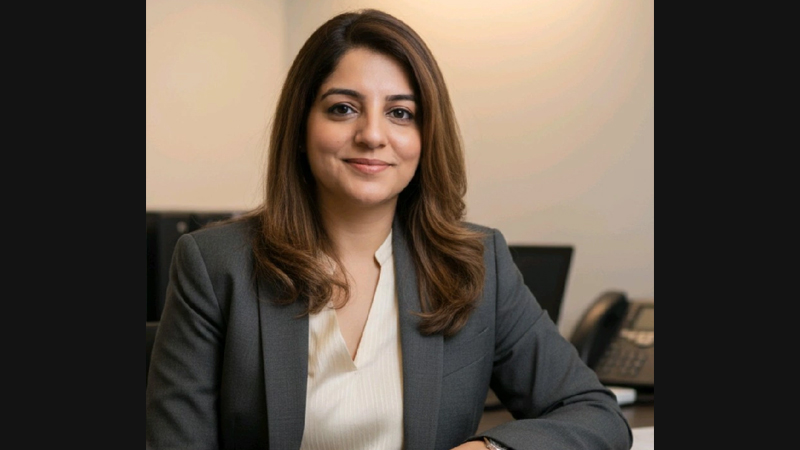
MUMBAI: Publicis Groupe India has appointed Sonal Verma as managing director of Arc Worldwide India, handing the reins of its experiential and shopper marketing business to a leader steeped in live brands and real world storytelling.
Arc Worldwide, the Groupe’s specialist arm focused on experiences that nudge consumers from curiosity to checkout, sits at the intersection of creativity, commerce and culture. Verma’s mandate is to sharpen that edge as brands grapple with shorter attention spans and more complicated buying journeys.
Verma joins from Cheil India, where she spent nearly five years building and leading the brand experience practice, most recently as senior vice president and head of brand experience. Her career reads like a tour of India’s experiential landscape, with leadership roles at Momentum Worldwide, Percept D Mark, Blockkbuster Events and Showtime Events.
She has also held senior activation roles at Radio City and The Times of India, giving her a rare mix of agency, media and on-ground execution experience. The common thread has been simple: turning big ideas into moments people remember and talk about.
At Arc Worldwide India, Verma will focus on expanding the agency’s experiential and shopper capabilities, strengthening client partnerships and keeping the work firmly rooted in consumer behaviour rather than buzzwords.
With Verma at the helm, Arc Worldwide is expected to double down on ideas that live beyond screens and closer to everyday life. For an industry obsessed with clicks and scrolls, this is a reminder that sometimes the strongest connections still happen face to face.
Ad Campaigns
Barbeque Nation taps ‘milne ki bhookh’ to kick off the new year
A new film campaign urges diners to step away from screens and back to the table
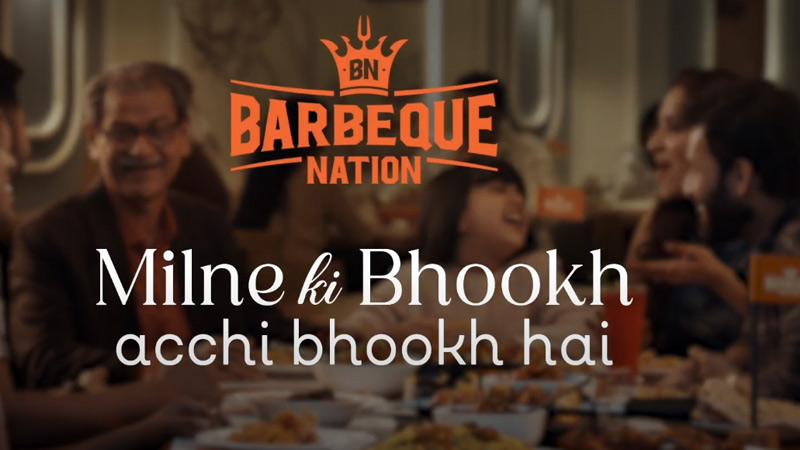
BENGALURU: Barbeque Nation is ringing in the new year with a reminder that some cravings cannot be ordered online. The casual dining chain has rolled out a new film campaign, milne ki bhookh, pitching its restaurants as places to meet, reconnect and linger over food.
Set against a world of constant messages and missed meet-ups, the campaign leans into a simple truth: dining out remains one of the few rituals that still brings people together. Barbeque Nation positions itself as the excuse and the setting for real conversations, shared plates and unhurried moments.
Nakul Gupta, cmo at Barbeque Nation, says the brand has long been about shared celebrations. As the year turns, milne ki bhookh captures what he calls a growing hunger to meet, connect and spend time together, with food at the centre of that experience.
Created by Makani Creatives, the campaign comprises three films built around Barbeque Nation’s signature grills and desserts. The storytelling is deliberately sensorial, designed to spark cravings while nudging diners to step out and meet in person.
Pavan Punjabi, chief integration officer at Makani Creatives, says the idea stems from a familiar contradiction. People are constantly connected, yet meetings with loved ones are endlessly postponed. Milne ki bhookh, he says, is a gentle push to make time for real-life catch-ups, using food as the reason to come together, share a meal and create memories.
The campaign breaks on December 25 with the grilled prawns film and will run for two months, amplified across digital platforms. As the new year begins, Barbeque Nation is betting that the strongest appetite of all is not for food alone, but for each other.

TEST
TEST


MIB sets OTT accessibility rules, mandates captions and audio description
Platforms get three years to add features for hearing and visually impaired


Boney Kapoor acquires remake rights of Tamil political satire Thalaivar Thambi Thalaimaiyil
Strong word-of-mouth turns Pongal satire into remake pick


Netflix India names Rekha Rane director of films and series marketing
Streaming giant bets on a seasoned marketer who helped build Amazon and Netflix into household names


Zabeen signs off from TV9 after shaping the network’s public voice
Communications leader exits after three years spanning MD office strategy and media outreach.


Dhawan steps up to bat for Delhi’s grassroots sports push
Cricket star named face of Delhi Khel Mahakumbh to fuel youth talent hunt.


Orient Beverages pops the fizz with steady Q3 gains and rising profits
Kolkata-based beverage maker reports stronger revenues and profits for December quarter.


Cheekatilo shines in the dark with record debut on Prime Video
A crime thriller steps out of the shadows as Telugu storytelling claims centre stage.

Checkmate Goes Digital as Chess Joins Esports Nations Cup 2026
From boards to bytes, chess readies for a nation-first showdown in Riyadh.


Washington Post CEO exits abruptly after newsroom cuts spark backlash
Leadership change follows layoffs, protests and a bruising battle over trust.


BCCL profit jumps 53 per cent in FY25 as tax bill shrinks
Revenue rises 4.3 per cent to Rs 10,209.33 crore while deferred tax gain lifts bottom line sharply


Zee Cine Awards 2026 set for fan-first celebration in Mumbai
Akshay Kumar and stars launch awards at NSCI Dome on Feb 28


JioStar absorbs IndiaCast to streamline distribution
Merger creates one-stop hub for content, digital, and delivery


Hamdard honours changemakers at Abdul Hameed awards
NEW DELHI: Hamdard Laboratories gathered a cross-section of India’s achievers in New Delhi on Friday, handing out the Hakeem Abdul...


Why the best campaigns today start with insights, not ideas
MUMBAI: For decades, creative storytelling has been the cornerstone of brand communication. The “big idea” amplified through catchy jingles, striking...
-
I&B Ministry4 months ago
MIB sets OTT accessibility rules, mandates captions and audio description
-

 News Headline5 months ago
From selfies to big bucks, India’s influencer economy explodes in 2025
-

 e-commerce5 months ago
Swiggy Instamart’s GOV surges 103 per cent year on year to Rs 7,938 crore
-
 MAM2 years ago
OpenAI joins C2PA steering committee
-
 Digital10 months ago
Squadstack AI helps Stage cut calls by 55 per cent and costs by 70 per cent
-
 News Headline1 year ago
TRAI puts a ‘stop’ to unsolicited calls and messages
-
 iWorld1 year ago
Kuku TV transforms India’s OTT space with vertical microdrama boom
-

 Brands4 months ago
Page Industries posts steady Q3 growth, declares Rs 125 interim dividend