
GECs
2001 – A Look Back


The year that was in television
2001: it was a year of upheaval for the Indian television industry. A year that was characterised by:
*deflating ad revenue growth,
*burgeoning layoffs,
*yo-yoing share prices,
*regulatory logjam,
*cable TV cartelisation,
*news channels taking centrestage,
*a miserable attempt at disparaging the viewership ratings systems in the country,
* the movement towards what could be called the beginnings of a more realistic pay TV market with more and more channels going digital and pay.
*Increasing distance between the market leader Star Plus and the No 2 and No 3.
* Expansion in the regional language channel market.
*The collapse of the DD-Channel Nine deal.
The year started off disastrously with the earthquake in Gujarat on Republic Day which left behind scores of headends being totalled and miles of twisted cable in one of India‘s most cable TV rich states. Recovery took time, but sustained efforts meant that headends started carrying signals to the homes that were standing in the disaster zone.
Ad revenues for the television industry – as it happened for most other media – went into a funk courtesy the negative sentiment that was prevailing as the year 2001 began. The earthquake, the arrest of one of the leading suppliers of movies to the television industry, Bharat Shah, the Ketan Parekh expose post-budget which led to the collapse of the stockmarkets and the media stocks that he was backing, the Tehelka sting operation on defence deals and the subsequent political fallout, the 11 September WTC attacks and the US-led coalition attack on Afghanistan thereafter, and the growing Indo-Pak friction as the year ended, were in excess of what the economy could carry.

There is one news image however, that remains etched in the mind and in a way encapsulates the turbulence that marked 2001. It is watching live as the second World Trade Centre building was hit by a Boeing 767. Seeing the plane hitting the building in a ball of fire and coming through on the other side before incinerating into a million fragments was a far more awesome visual spectacle than anything the best in special effects could dream up. If that was not enough the collapse of the two buildings in a heap of dust a few minutes later only added to the collective shock.
Result: a mood of caution – rather pessimism, continues to prevail in business – and hence media spends – at the time of writing. Estimates are that television advertising spend grew no more than eight per cent during the year to end at about Rs 26,000-odd million. A large chunk of this growth was cornered by the existing market leaders: Star, Sun, Eenadu and of course DD.
The polarisation of revenues dealt a heavy blow to their rivals. Both Sony and Zee TV – and more so the latter – made what looked like desperate measures when what they needed were solid business, programming and marketing planks.
Zee?s much-hyped relaunch in August with 24 new shows and a channel mascot named Khushi (happiness) hit the dust. Nothing represented the failure of the new effort better than what was to be its channel driver Aap Jo Bolein Haan to Haan, Aap Jo Bolein Na to Na, an interactive programme, which is being dragged on for what no one knows.
On another front, Zee made the right moves though. The company inked a joint venture agreement with Turner International India Ltd to market and distribute the Zee and Turner channels (Cartoon Network, HBO and CNN) thereby greatly strengthening its bouquet.
This is significant because with more channels going pay and the movement being towards a more realistic subscription regime, the issue of the customer having the freedom of choice to watch his or her favourite channel has come to the fore.
Everyone is looking for alliances and especially smaller players like SABe TV and B4U to name just two are actively on the lookout for that worthwhile tie-up.
The industry as a whole witnessed hard times and the dreaded pink slip was being issued across the industry, leading to scores of layoffs.
The most high-profile of these were seen at Sony Entertainment which saw the exit of many senior executives. The channel is being completely reorganised and refocussed looking ahead to the coming year.
In South India‘s main market, Tamil Nadu, Raj TV, Jaya TV, DD Tamil all had difficulties in staying the course while in Andhra Pradesh, Gemini from the Sun TV group continued its long running battle with Eenadu. Eenadu on its part held its ground even as it prepared to expand into other languages.
September witnessed a rather messy divorce 12 months after what was expected to be the grand resurgence of state-owned broadcaster Doordarshan. DD Metro and Kerry Packer‘s Nine Gold parted ways and DD‘s experiment with a professional working system sadly was put to rest. Another happening was that DD News, which was launched as an encrypted service last year with the support of a cable TV amendment to have it compulsorily carried on cable TV networks (along with DD Sports) was wisely wound up (a year late, but better late than never). DD is now paying more attention to marketing efforts but the results of this will be known only next year.
On the legislative front, the government finally tabled the Convergence Bill and it is expected to come up for discussion in the next Parliament session. The bill envisages investing a super convergence commission with control of broadcasting as its major plank.
Speaking of convergence, the information technology and telecommunications ministries have been officially merged into one super ministry of communications and information technology under Pramod Mahajan.
In the new dispensation information and broadcasting minister Sushma Swaraj has seen a lot of her powers being whittled down.
2001 also saw Cable TV land‘s undelivered promise of bringing broadband Internet to Indian cable TV homes remain just that. Undelivered.
The same seems likely to hold true for the “landmark agreement” the I&B ministry managed to broker wherein the film industry, cable operators and multi-system operators (MSOs) agreed to jointly fight video piracy and not telecast any film on cable networks without clearance from the copyright holder.
The fact however is that most new releases like Asoka, Abhay, Tere Liye and Gadar have already been shown on most of these networks. Unless penal action is taken, the menace that costs the film industry Rs 10,000 million annually is unlikely to be checked.
If content is king, this year the throne was abdicated in favour of a queen. Even more so than last year. And the queen was most certainly Balaji Telefilms‘ creative director Ekta Kapoor who took the term hit factory both figuratively and literally when it came to her productions. Whether it was Star, Sony or Zee, the hit shows had her name behind them.
It was around these very hits that the middle of the year saw a major shake-up in the industry. What was purported to be the definitive list of the people meters of both market research agencies TAM and INTAM, were leaked. After much breastbeating and a whole load of scurrilous charges being bandied about, the verdict was: for better or worse, the ratings system, while in need of tightening up on its security systems, was the best available tool to measure performance of programmes.
It had one positive fallout though: the announcement that TAM and INTAM would be merged so that by the middle of the next year there would be only one currency as far as ratings are concerned.
While on ratings, the end of the year so the annoucement about the imminent retirement of the show that blasted the ratings chart like nothing before it and was the driver that polevaulted Star Plus to the pre-eminent position it enjoys today – Kaun Banega Crorepati. This opens up a whole load of possibilities and points to one thing. That 2002 offers some hope to Star‘s rivals.
POSTSCRIPT: Indian Television Dot Com had some milestones of its own. On 6 July 2001 the first ever Indian Telly Awards 2001 dedicated to the television trade was held which was a resounding success. The year concluded with the first ever workshop cum forum for Indian TV scriptwriters, Qalam 2001, bringing together budding and veteran wielders of the pen. The workshop, conducted over two days on 20 and 21 December, succeeded in throwing up a plethora of suggestions that could bring order in an otherwise scattered industry.
A common sentiment that has been expressed across the board after both these events is that they were long overdue and it is a good thing that someone had finally thought it fit organise them. Expect more pathbreaking initiatives from Indian Television Dot Com in the coming year as well.



CHENNAI: It appears there is still plenty of Sun to go around in the Indian broadcasting landscape, even if a few clouds have drifted across the financial horizon. Sun TV Network Limited, the Chennai-based behemoth that dominates airwaves across seven languages, has tuned into a steady frequency for the quarter ending 31 December 2025. While the numbers show a resilient revenue stream, the company’s latest broadcast reveals a few static-filled spots in its profit margins.
For the quarter in question, Sun TV’s total income climbed by approximately 3.31 per cent, reaching Rs 958.39 crores compared to Rs 927.66 crores in the same period last year. Revenue from operations also saw a healthy bump, rising 4.32 per cent to Rs 827.87 crores.
The real star of the show, however, was domestic subscription revenue, which surged by 8.86 per cent to Rs 472.99 crores. This growth highlights the enduring appetite for Sun’s diverse content, which spans everything from daily soaps in Tamil and Telugu to its burgeoning OTT platform, Sun NXT.
Despite the revenue growth, the picture quality of the profits was slightly blurred by rising costs. Eitda for the quarter stood at Rs 409.79 crores, a dip from the Rs 432.14 crores recorded in the corresponding 2024 quarter.
The profit after tax followed a similar downward trend, settling at Rs 316.44 crores against the previous year’s Rs 347.17 crores. Advertisers also seemed to have switched channels slightly, with advertisement revenues sliding to Rs 291.94 crores from Rs 332.17 crores.
Sun TV isn’t just playing on home turf; its sporting ambitions are becoming increasingly global. The network now owns three major cricket franchises: SunRisers Hyderabad in the IPL, SunRisers Eastern Cape in SA20, and SunRisers Leeds Limited in The Hundred (UK).
The foray into British cricket saw the company acquire a 100 per cent stake in Northern Superchargers Limited (now SunRisers Leeds) for approximately £100 million. While these franchises brought in Rs 14.61 crores this quarter, they also incurred corresponding costs of Rs 19.89 crores. Over the nine-month period, however, the cricket business is a major player, contributing Rs 487.64 crores in income.
The company’s bottom line took a minor hit from exceptional items, including a Rs 4.23 crore charge related to India’s new Labour Codes, which consolidated 29 existing labour laws. Additionally, the consolidated results reflect the amalgamation of Kal Radio Limited with Udaya FM, a move that became effective in May 2025 and required a restatement of previous figures.
To keep investors from reaching for the remote, the Board has declared an interim dividend of 50 per cent, that’s Rs 2.50 per equity share. This comes on top of earlier dividends of 100 per cent (Rs 5.00) and 75 per cent (Rs 3.75) declared in August and November 2025, respectively.
With a massive cash reserve and a dominant position in the South Indian market, Sun TV continues to shine, even if the current quarter required a bit of fine-tuning. For now, shareholders can sit back, relax, and enjoy the show.

MUMBAI: Sony Pictures Networks India has hired Pradeep M to handle standards and practices for its southern market, bolstering its compliance bench as content rules tighten across platforms.
Pradeep, who has nearly 13 years in the entertainment media industry, takes on responsibility for content standards in a region that is both linguistically diverse and regulatorily sensitive. His brief spans television, OTT, sports and digital platforms.
He specialises in content review and compliance across shows, commercials, on-air promotions and international feeds, ensuring alignment with broadcast, OTT and advertising codes. He has also handled brand approvals and sponsorship integrations for heavily regulated categories—including online gaming, cryptocurrency, NFTs and lottery brands—offering guidance shaped by fast-evolving rules.
Before Sony, Pradeep worked at Jiostar as assistant manager for content regulation from November 2024 to January 2026. Earlier, he spent nearly seven years at Viacom18 Media, rising from senior executive to assistant manager in content regulation between 2018 and 2024. There he served as a key compliance touchpoint for the network.
His career began on the creative side. Between 2013 and 2018, he worked as executive producer on feature films and television shows, gaining hands-on exposure to production. He also had a stint as a non-fiction show director at Star TV Network in 2017. That mix of creative and regulatory experience gives him a dual lens—how content is made and how it must be managed.
As regulators, platforms and advertisers all tighten the screws, broadcasters are investing more in gatekeepers who can keep creativity within the lines. Sony’s latest hire shows where the industry is heading: in the streaming age, compliance is content’s quiet co-star.
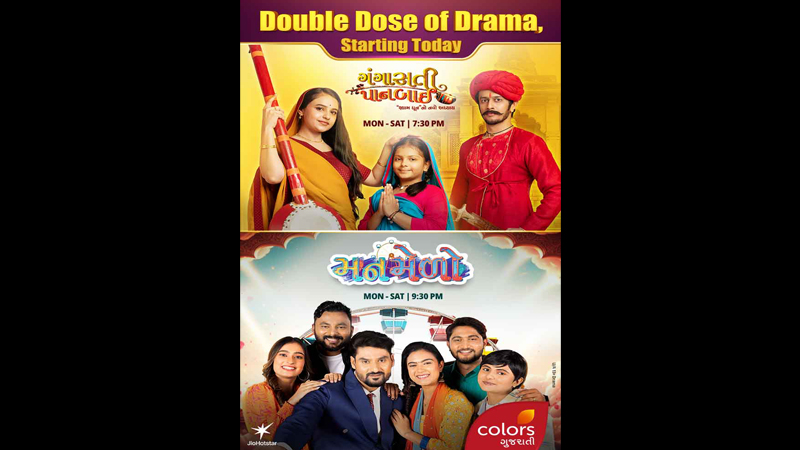
MUMBAI: Colors Gujarati has unveiled two new prime-time shows as part of its push to strengthen culturally rooted storytelling for regional audiences. The channel will premiere the devotional saga Gangasati–Paanbai at 7.30 pm, followed by the romantic family drama Manmelo at 9.30 pm from February 2.
Inspired by Gujarat’s spiritual and literary heritage, Gangasati–Paanbai: Shyam Dhun No Navo Adhyay draws from the timeless bhajans and poetry of saint-poetesses Gangasati and Paanbai, weaving devotion and human values into a contemporary narrative aimed at younger viewers.
In contrast, Manmelo explores love and responsibility across social divides, tracing the lives of three middle-class sisters whose relationships with three affluent brothers reshape their futures. The show delves into ambition, emotional conflict and the realities of married life, offering a layered family drama.
A Colors Gujarati spokesperson said the new launches reflect the channel’s commitment to authentic Gujarati entertainment that blends cultural values with modern storytelling.


TEST

MIB sets OTT accessibility rules, mandates captions and audio description

Boney Kapoor acquires remake rights of Tamil political satire Thalaivar Thambi Thalaimaiyil

Netflix India names Rekha Rane director of films and series marketing

Zabeen signs off from TV9 after shaping the network’s public voice

Dhawan steps up to bat for Delhi’s grassroots sports push

Orient Beverages pops the fizz with steady Q3 gains and rising profits
MIB sets OTT accessibility rules, mandates captions and audio description

Swiggy Instamart’s GOV surges 103 per cent year on year to Rs 7,938 crore

From selfies to big bucks, India’s influencer economy explodes in 2025

Squadstack AI helps Stage cut calls by 55 per cent and costs by 70 per cent

OpenAI joins C2PA steering committee

TRAI puts a ‘stop’ to unsolicited calls and messages

Kuku TV transforms India’s OTT space with vertical microdrama boom
TEST
MIB sets OTT accessibility rules, mandates captions and audio description
Boney Kapoor acquires remake rights of Tamil political satire Thalaivar Thambi Thalaimaiyil
Netflix India names Rekha Rane director of films and series marketing
Zabeen signs off from TV9 after shaping the network’s public voice
Dhawan steps up to bat for Delhi’s grassroots sports push
Orient Beverages pops the fizz with steady Q3 gains and rising profits
-
 I&B Ministry4 months ago
MIB sets OTT accessibility rules, mandates captions and audio description
-
 News Headline5 months ago
From selfies to big bucks, India’s influencer economy explodes in 2025
-
 e-commerce5 months ago
Swiggy Instamart’s GOV surges 103 per cent year on year to Rs 7,938 crore
-
MAM2 years ago
OpenAI joins C2PA steering committee
-
Digital10 months ago
Squadstack AI helps Stage cut calls by 55 per cent and costs by 70 per cent
-
News Headline1 year ago
TRAI puts a ‘stop’ to unsolicited calls and messages
-
iWorld1 year ago
Kuku TV transforms India’s OTT space with vertical microdrama boom
-

 Brands4 months ago
Page Industries posts steady Q3 growth, declares Rs 125 interim dividend