
Cable TV
Siti bullish on broadband: Rajesh Sethi

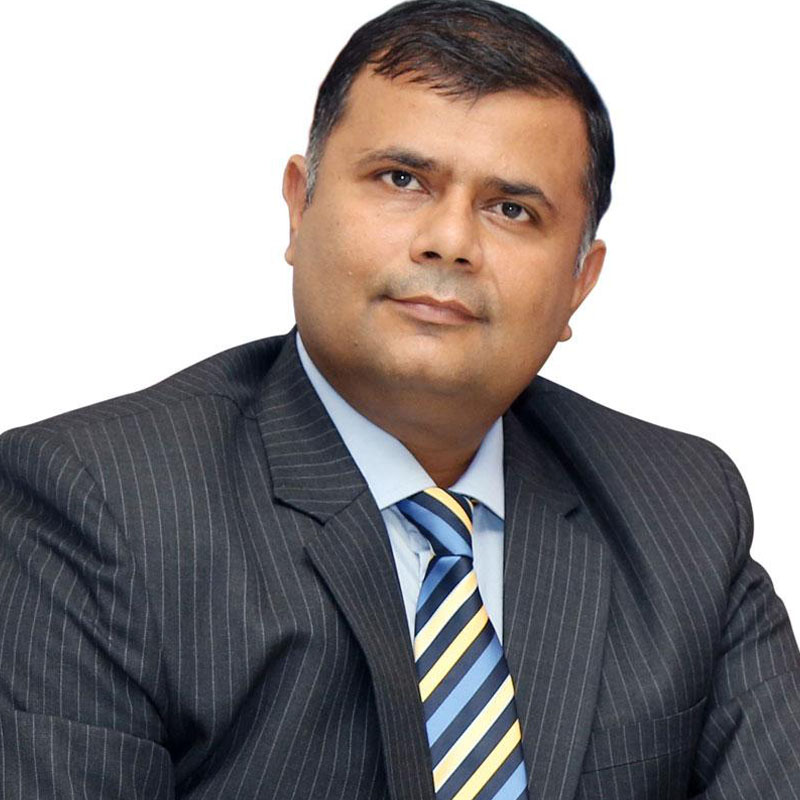
Mumbai: Despite uncertainty in many quarters, these are interesting times for people following the multi-system operator (MSO) industry. Recently, Siti Networks Ltd (Siti) released its Q2 and H1 results for 2017-18, reigniting the hope for growth in the industry. Announcing growth in operating EBITDA, the company outperformed the competition in set-top box (STB) seeding by adding nearly 2.3 million boxes in the first half of the year as against near flat growth by other companies in the industry.
For Siti, this forms the bedrock for future growth as monetisation of these boxes in H2 will bring incremental revenue benefit to the company. In the cable television distribution business, STB seeding, monetisation of seeded STBs, and collection efficiency are the core performance metrics.
The broadband space is exploding with Reliance Jio having announced its impending entry and trial runs across various cities in the country. Siti is looking to leverage existing infrastructure and improve extraction levels. The company will look at a number of business models to ascertain what is the right fit in this business.
In an email interaction, Rajesh Sethi spoke to Indiantelevision.com on a wide range of issues. Here’s what he had to say:
What is the direction you are taking to turn around the fortunes of Siti Networks?

We are one of the largest distribution platforms in the country and are working on the ethos of ‘demand more.’ We will leave no stone unturned to deliver the best to our customers while ensuring enhanced shareholder value. On the video front, this is going to be the last year of major seeding as we consolidate our market dominance. The focus will be on improving monetisation, collection efficiency, and prepaid implementation. We are well prepared to execute the tariff order as soon as the judgment is passed on the same.
On the broadband front, we are looking to leverage our existing infrastructure and improve extraction levels. We will be selective in our broadband expansion and will look at a range of business models to ascertain what suits us best. The focus is on four pillars of people, process, product, and corporate governance with emphasis on compliances, systems and processes, harnessing inbuilt operating leverage, and making the organisation more agile and lean.
What is your strategy to prune losses in the time to come?
In the video business, seeding to capture the opportunity offered by digitisation, subsequent monetisation improvement, and enhanced collection efficiency will be the key priorities. These factors will form the bedrock for strong sustainable growth and ensure recurring cash flows.
Broadband is a field that we are quite bullish on. Uptake in broadband is dependent on 4G pricing, which definitely is now looking to increase. Broadband growth will come from primarily form Tier 2 and 3 cities rather than the bigger cities. Broadband revenue performance will also see uptick with increasing customer base, churn, and fault rate control.
Cost optimisation is a major lever in coming back to profitability and we are looking to rationalise our bandwidth, general and administrative, content, and HR costs to drive increased savings. The tariff order is expected to come by end of this fiscal and will substantially moderate content cost growth; content cost is expected to become a pass through.
These actions are expected to contribute towards improved recurring cash flows and better profitability.
How soon do you see a revival in the cable industry?
The revival you speak of is already underway as Phase 3 and 4 monetisation has started happening and this will only move up, eventually being at par with monetisation levels in Phase 1. The bulk of Phase 4 seeding will be completed this fiscal and you will see strong subscription revenue growth lead by volume and monetisation increases. Thereafter, it is a steady state perpetuity business.
The tariff order will moderate content cost growth as customer choice will dictate the content they view. At the same time, broadband is a big opportunity that will spur long-term growth and drive convergence. The industry is in a transitory phase and things will improve significantly in a year’s time.
Why hasn’t digitisation helped the dynamics of the industry as envisioned?
Ever since the announcement of digitisation, there were multiple delays due to a variety of factors. Phase 3 and 4 deadlines were delayed by more than a year due to multiple petitions, regulatory uncertainty, and other factors. As we speak, the tariff order is pending in the Chennai high court. Most DPOs incurred huge capital expenditure in upgradation of the network and purchasing STBs. The costs were incurred upfront and, therefore, monetisation got delayed.
In addition to these delays, regulatory guidelines such as MIA/SIA also faced delays in enforcement. You are seeing this turbulence as we are in transition right now…once things settle down, you will witness strong recurring cash flows. The content delivery value chain will become more streamlined and the balance of power will shift to the DPOs.
How important is it to have a lean workforce? Do you have a retrenchment strategy in place?
We have been focusing on areas where we can bring efficiencies into the system and one such effort in right sizing was executed in Q2 of 2017-18. This is a regular practice in most mature industries and allows the organisation to become leaner and agile. With this, we have given more latitude to our current employees by adding joint responsibilities in the video and broadband space in terms of delivery. We are focussed on employee growth with regular training sessions being held to upgrade skill sets and clearly delineating what is expected from them. Recently, we also rolled out our seven core values that define our DNA and influence behavior. We want to inculcate and sustain a high-performance culture in this company. These are the guiding principles in our efforts to take SITI to greater heights.
What is your vision for Siti Networks?
We are the leading content provider in the country and will continue to sustain our preponderance in video. Simultaneously, broadband is a natural transition for an entity like ours. Customers have already shown indication towards moving to non-linear on-demand entertainment and we expect broadband penetration to see a huge increase. Hence, we are moving towards delivering non-linear content. This will be the future of content consumption and Siti is preparing earnestly for it.
We are also working with our technology partners to bring innovative products to the market. Our vision is that we should be at the forefront of providing world-class technology to customers.
How do you see the company evolving over the next two years?
Siti will have consolidated its primary growth lever of video with strong recurring cash flows taking place. We will be offering substantial HD, OTT, and other VAS services. In addition, we intend to push the pedal on broadband and ensure we have sizeable presence in the high-speed-wired broadband space. We could go in for some inorganic expansion as well.






Cable TV
Den Networks Q3 profit steady despite revenue pressure
PAT rises 15 per cent QoQ as revenue dips 4 per cent YoY amid cost pressures.
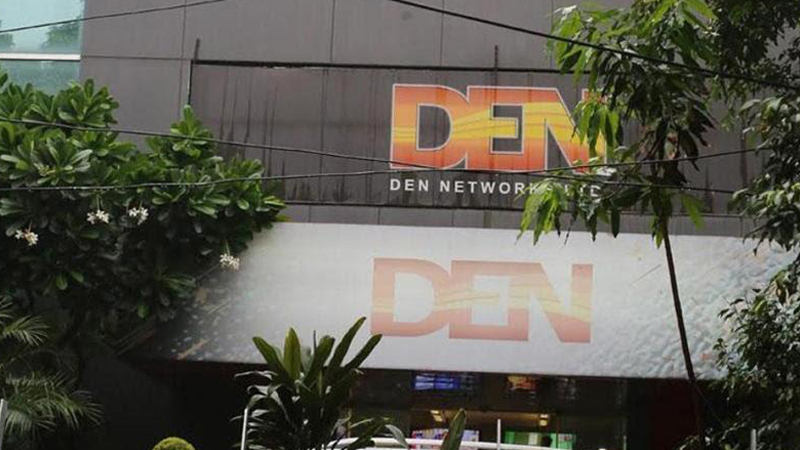
MUMBAI: When margins wobble, liquidity talks and in Q3 FY25-26, cash did most of the talking. Den Networks Limited closed the December quarter with consolidated revenue of Rs.251 crore, marginally higher than the previous quarter but down 4 per cent year-on-year, even as profitability stayed resilient on the back of strong cash reserves and disciplined cost control.
Subscription income softened to Rs.98 crore, slipping 3 per cent sequentially and 14 per cent from last year, while placement and marketing income offered some cheer, rising 15 per cent quarter-on-quarter to Rs.148 crore. Total costs climbed faster than revenue, up 7 per cent QoQ to Rs.238 crore, driven largely by higher content costs and operating expenses. As a result, EBITDA dropped sharply to Rs.13 crore from Rs.19 crore in Q2 and Rs.28 crore a year ago, pulling margins down to 5 per cent.
Yet, the bottom line refused to blink. Profit after tax stood at Rs.40 crore, up 15 per cent sequentially and only marginally lower than last year’s Rs.42 crore. A healthy Rs.57 crore in other income helped cushion operating pressure, keeping profit before tax at Rs.48 crore, broadly stable quarter-on-quarter despite the tougher cost environment.
The real headline-grabber, however, sits on the balance sheet. The company remains debt-free, with cash and cash equivalents swelling to Rs.3,279 crore as of December 31, 2025. Net worth rose to Rs.3,748 crore, while online collections accounted for 97 per cent of total receipts, underscoring strong cash discipline across operations, including subsidiaries.
In short, while Q3 showed signs of operating strain, the financial backbone remains solid. With zero gross debt, steady profits and a formidable cash war chest, the company enters the next quarter with flexibility firmly on its side proving that in uncertain markets, balance sheet strength can be the best growth strategy.
Cable TV
Plugging along as Hathway tunes in steady profits this quarter
Cable major posts Rs 22 crore Q3 profit as TV business offsets broadband drag.
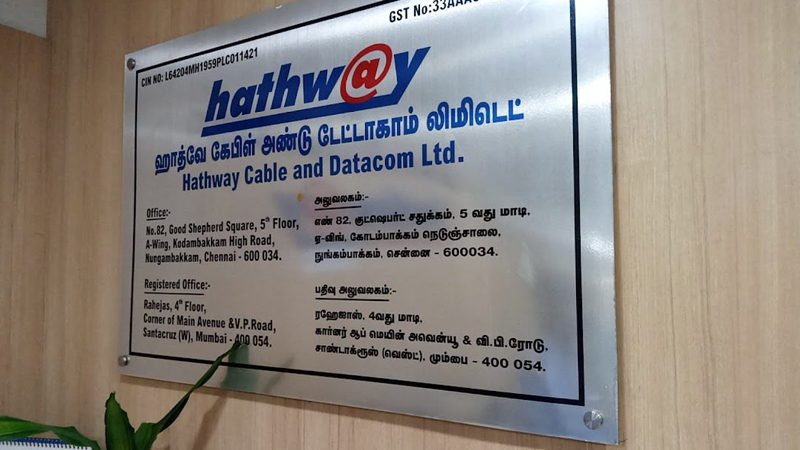
MUMBAI: In a quarter where staying connected mattered more than moving fast, Hathway Cable and Datacom kept its signal steady. The cable and broadband major reported a net profit of Rs 21.7 crore for the December 2025 quarter, marking a clear improvement from Rs 13.6 crore a year earlier, even as pressures persisted in parts of its operating portfolio.
For the quarter ended December 31, 2025, revenue from operations stood largely flat at Rs 536.6 crore, compared with Rs 511.2 crore in the same period last year. Including other income of Rs 21.1 crore, total income rose to Rs 557.7 crore, reflecting incremental gains despite a competitive media and connectivity landscape.
Profitability improved on the back of disciplined cost control and higher contribution from associates. Profit before tax increased to Rs 28.2 crore, up from Rs 19.1 crore in Q3 FY25, aided by Rs 3.9 crore in share of profit from associates and joint ventures. After tax, earnings for the quarter climbed nearly 60 per cent year-on-year.
Over the nine months ended December 31, 2025, Hathway reported a net profit of Rs 71 crore, compared with Rs 57.7 crore in the corresponding period last year. Total income for the nine months came in at Rs 1,677.3 crore, up from Rs 1,599.8 crore, while profit before tax rose to Rs 94.7 crore from Rs 84.2 crore.
A closer look at the segments shows a familiar split story. The cable television business remained under pressure, reporting a segment loss of Rs 11.4 crore for the quarter, though this narrowed sharply from the Rs 16.6 crore loss seen a year ago. In contrast, the broadband business returned to the black, delivering a modest but positive contribution of Rs 4.2 crore, helped by associate income. Dealing in securities continued to be a bright spot, generating Rs 14.7 crore in quarterly profits.
Costs stayed broadly contained. Pay channel costs, the single largest expense, rose to Rs 287.4 crore, while depreciation and amortisation stood at Rs 74 crore. Finance costs remained negligible at Rs 0.2 crore, keeping leverage risks in check.
Hathway’s earnings per share for the quarter improved to Rs 0.12, up from Rs 0.08 a year ago. The company maintained a strong balance sheet, with total assets of Rs 5,302.4 crore and total liabilities of Rs 848.9 crore as of December 31, 2025.
While structural challenges persist in the traditional cable business, the numbers suggest Hathway is slowly recalibrating its mix trimming losses where needed, leaning on associate income, and keeping the broadband engine ticking. For now, the company may not be racing ahead, but it is clearly staying tuned in to profitability.
Cable TV
Signal drop Tejas Networks’ numbers stay patchy in a volatile quarter
Revenue ticks up, losses widen as costs, provisions and resets weigh on FY26.
MUMBAI: In telecom, even the strongest signals face interference and Tejas Networks Limited’s latest numbers show just how noisy the airwaves remain. The Tata Group-backed networking firm reported unaudited standalone revenue of Rs 305.72 crore for the quarter ended December 31, 2025, up sequentially from Rs 261.37 crore in the September quarter, but sharply lower compared with the Rs 2,642.05 crore clocked in the year-ago period. The topline recovery, however, was overshadowed by a pre-tax loss of Rs 303.20 crore, widening from a Rs 473.03 crore loss in the previous quarter, and reversing a Rs 211.06 crore profit reported in the December 2024 quarter.
After tax, the company posted a loss of Rs 196.89 crore for Q3 FY26, compared with a loss of Rs 307.17 crore in Q2 FY26 and a profit of Rs 165.42 crore a year earlier. For the nine months ended December 31, 2025, Tejas Networks reported revenue of Rs 769.02 crore and a loss after tax of Rs 697.97 crore, a sharp swing from a Rs 512.67 crore profit in the corresponding nine-month period last year. The numbers reflect a year marked by execution challenges rather than demand collapse.
Costs remained the dominant spoiler. Total expenses for the December quarter stood at Rs 616.50 crore, driven by elevated material costs, employee expenses and provisioning. The company also flagged several one-offs and adjustments: a Rs 9.85 crore provision linked to the implementation of new labour codes, ₹24.35 crore in warranty provisions, and reversals related to inventory obsolescence. Earlier quarters had already absorbed heavy charges tied to contract manufacturing losses, design changes and write-downs, the hangover from which continues to weigh on profitability.
Tejas reiterated that it operates as a single reportable segment focused on telecom and data networking products and services, offering little insulation from sector-wide volatility. While revenue momentum has stabilised sequentially, the contrast with the previous financial year remains stark. For context, the company closed FY25 with audited standalone revenue of Rs 8,915.73 crore and a profit after tax of Rs 450.66 crore, underscoring how sharply the operating environment has shifted in FY26.
The results were reviewed by the audit committee and approved by the board on January 9, 2026, but they leave investors with a familiar question: when does recovery turn structural rather than episodic? For now, Tejas Networks appears to be in reset mode, balancing execution clean-up with cost discipline. In a sector where margins can be as fragile as fibre strands, the next few quarters will matter as much as the signals the company sends to the market.


TEST

MIB sets OTT accessibility rules, mandates captions and audio description

Boney Kapoor acquires remake rights of Tamil political satire Thalaivar Thambi Thalaimaiyil

Netflix India names Rekha Rane director of films and series marketing

Zabeen signs off from TV9 after shaping the network’s public voice

Dhawan steps up to bat for Delhi’s grassroots sports push

Orient Beverages pops the fizz with steady Q3 gains and rising profits
MIB sets OTT accessibility rules, mandates captions and audio description

Swiggy Instamart’s GOV surges 103 per cent year on year to Rs 7,938 crore

From selfies to big bucks, India’s influencer economy explodes in 2025

Squadstack AI helps Stage cut calls by 55 per cent and costs by 70 per cent

OpenAI joins C2PA steering committee

TRAI puts a ‘stop’ to unsolicited calls and messages

Kuku TV transforms India’s OTT space with vertical microdrama boom
TEST
MIB sets OTT accessibility rules, mandates captions and audio description
Boney Kapoor acquires remake rights of Tamil political satire Thalaivar Thambi Thalaimaiyil
Netflix India names Rekha Rane director of films and series marketing
Zabeen signs off from TV9 after shaping the network’s public voice
Dhawan steps up to bat for Delhi’s grassroots sports push
Orient Beverages pops the fizz with steady Q3 gains and rising profits
-
 I&B Ministry4 months ago
MIB sets OTT accessibility rules, mandates captions and audio description
-
 News Headline5 months ago
From selfies to big bucks, India’s influencer economy explodes in 2025
-
 e-commerce5 months ago
Swiggy Instamart’s GOV surges 103 per cent year on year to Rs 7,938 crore
-
MAM2 years ago
OpenAI joins C2PA steering committee
-
Digital10 months ago
Squadstack AI helps Stage cut calls by 55 per cent and costs by 70 per cent
-
News Headline1 year ago
TRAI puts a ‘stop’ to unsolicited calls and messages
-
iWorld1 year ago
Kuku TV transforms India’s OTT space with vertical microdrama boom
-

 Brands4 months ago
Page Industries posts steady Q3 growth, declares Rs 125 interim dividend