
DTH
DTH subscriber growth muted in CY-2017

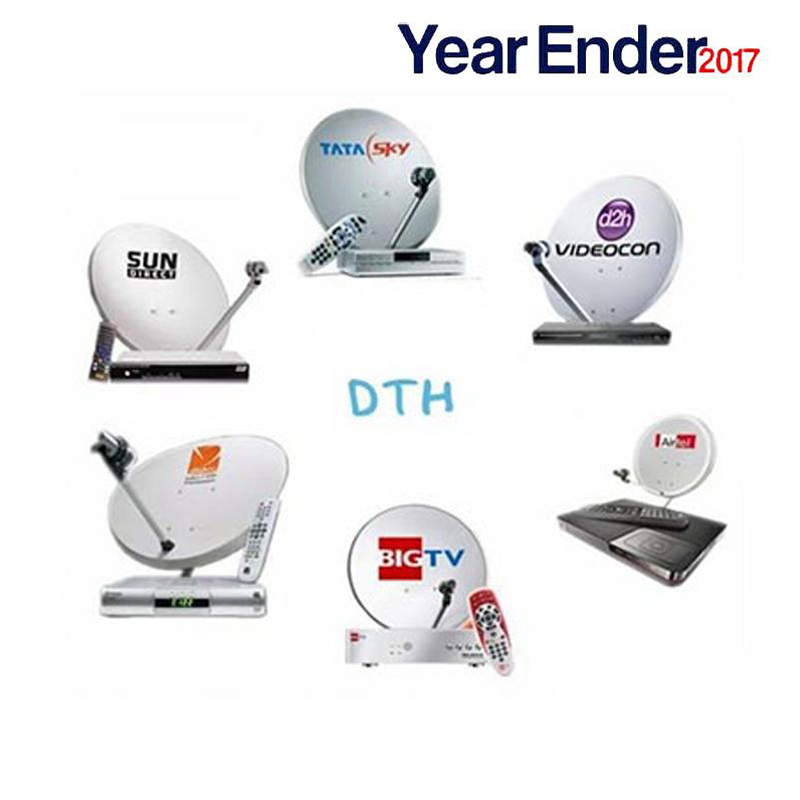
BENGALURU: DAS, especially phases 3 and 4, was supposed to be a great growth opportunity for television direct-to-home (DTH) service providers. Has that been the case? Not if one were to go by data released by the Telecom Regulatory of India (TRAI) and three of the six private DTH players in India.
The status quo
At present, there are six private pay-TV players (five active in the true sense of the word) and one government free-TV player DD FreeDish. The five players are: Airtel Digital TV or Airtel DTH, Dish TV, Sun Direct, TataSkyand Videocon DTH–the sixth player being Reliance Digital TV or Big TV.
Reliance Big TV has been acquired by Pantel Technologies and Veecon Media. Normal operations have to recommence as yet. A number of Big TV customers were acquired by other players and the true status of its operations and current subscriber numbers are still unclear at the time of writing.
Please refer to the figure below for subscriber share of the six private players at the end of 30 September 2017 (Q2-18 or Q2-2108).

DTH subscriber acquisition seems to have petered down in calendar year 2017 (CY2017, 1 January 2017 to 31 December 2017) as compared with CY 2016. Please refer to the chart below for active subscribers addedas per TRAI data until 30 September 2017 (Q2-2018) and data reported by the three private players – Airtel DTH, Dish TV and Videocon d2h until 31 December 2017. It may be noted that these three players had almost 63 percent share of subscribers according to the above-mentioned Dish TV investor presentation.

The continuous blue curved line in the chart below represents the total number of net active subscribersaddedfor each quarter – this number has been obtained by deducting the number of active subscribers in a quarter from the number of subscribers in the previous quarter. The combined total number of the three subscribers has been obtained by addition of net subscribers added by each of the three players – Airtel DTH, Dish TV and Videocon d2h – as declared by them in their financial/other releases and presentations. Thesecombined subscriber additions are represented by the continuous maroon line in the figure. The broken grey line represents the percentage of the combined net subscriber additions by the three players of the total subscriber additions as per TRAI data.

The chart below indicates the subscriber base of the three players and all private DTH players as per quarterly data released by TRAI. TRAI data for the October-December 2017 quarter has not been released at the time of writing. Subscriber data for each of the three players mentioned below has been obtained from their respective financial releases and presentations. The numbers have been rounded off to the nearest lakh by the author.
As is obvious, Dish TV is the biggest player in the country in terms of subscribers followed by Airtel DTH and Videocon d2h in that order. It may be noted that Tata Sky subscriber base could be higher than Airtel’s subscriber base. Tata Sky data is not available in the public domain, and hence this cannot be verified.

Overall, the players are faced with declining monthly average revenue per user (ARPU). In absence of complete ARPU data, the author has taken the liberty to calculate ARPUs of each of the three players by using quarterly operating revenue/subscription revenue of the players and dividing it by the subscriber base at the end of that quarter and then calculating the ARPU per month. Similarly, the quarterly operating/subscription revenues of the three players have been added and then divided by the combined subscriber base of the three players at the end of that quarter and then the average monthly average ARPU has been arrived at. In each case calculated ARPU numbers have been rounded off to the nearest rupee.
The combined four quarter average monthly ARPU of the three players across four quarters of 2017 has declined by Rs 9 to Rs 183 from Rs 192 in CY-2016. Airtel DTH is the premium player – its four quarter average monthly ARPU in 2017 increased by Rs 2 to Rs 230 from Rs 228 in 2017. Dish TV is a value player, its average declined by Rs 18 in 2017 to Rs 143 from Rs 161 in 2016. Videocon d2h four quarter average monthly ARPU in 2017 declined by Rs 9 to Rs 186 from Rs 195 in 2017. It must be reiterated here that the ARPU numbers mentioned in this paper have been calculated by the author and may vary from the actual numbers. The numbers in the graph below are just indicative numbers.

Besides the six private pay DTH players, FreeDish is a major player in terms of subscribers with an estimated 2.2 crore as per the numbers available in the public domain. It must however be noted that an exact number for registered or active subscribers is not available even with DD, since this is a free DTH service. If and when the announced Dish TV Videocon d2h merger happens, the merged entity will probably be one of the largest DTH players in the world in terms of subscriber numbers.
According to an E&Y report titled ‘India’s Free TV’ released in July 2017, among the DTH operators in India, FreeDish has grown to become the largest with its estimated 2.2 crore subscribers which E&Y predicted could cross 4 crore over the next two to three years.
A number of reasons can be attributed to this dismal performance–two of the chief ones that have been touted over the recent past by most players in media and entertainment industry are demonetisation in November 2016 and the implementation of the new GST regime. Given that most of India faced a cash crunch for a few months post demonetisation, money spends for entertainment took the least priority for the common man.Subscriber acquisition seems to have picked up in the April-June 2017 quarter, only to be dampened in the July-September 2017 – the quarter in which the new GST regime was implemented. The glitches of the new GST are slowly being ironed out. In the absence of TRAI data for the October-December 2017 quarter, numbers reported by the three players seem to indicate that DTH subscriber acquisition should have improved. Despite this, it seems unlikely that the industry was able to surpass or even match subscriber growth of CY-2016.
Another important reason could be that DTH is considered a premium service – by all the stakeholders in carriage ecosystem with the resulting perception that procurement as well as monthly subscription will be premium and hence a deterrent for the consumer. While some players such as Dish TV have been making attempts to come up with packages that it perceives should attract the masses, but, results as per TRAI data seem to indicate otherwise. Yes, Dish TV is the largest private player in the country that has come up with different pricing models under different brands, whether unwittingly or not, most of the other players present themselves as premium players and seem to have done little in that direction.
Also Read :
Recalibrating India’s DTH sector after Airtel DTH-Warburg Pincus deal


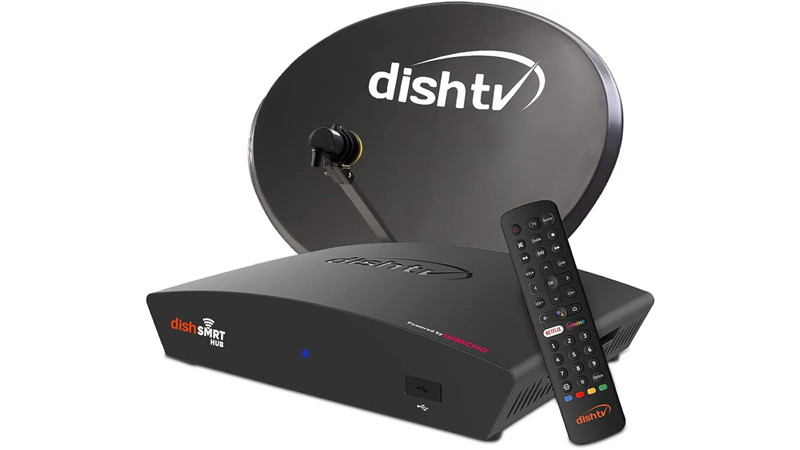
NOIDA: When the remote stops working, you don’t throw it away, you change the batteries. Dish TV is trying something similar. Faced with falling subscription revenues and a fast-shrinking DTH universe, India’s once-dominant satellite broadcaster is flipping channels, betting on smart TVs, OTT aggregation and a hybrid future even as the numbers flash red.
For the quarter ended 31 December, 2025, Dish TV India reported operating revenues of Rs 2,991 million, down 19.8 per cent year-on-year from Rs 3,730 million. Subscription revenues, still the backbone of the business, fell sharply by 32.2 per cent to Rs 2,245 million, reflecting industry-wide cord-cutting and persistent churn. The pain shows up clearly below the line.
Ebitda swung to a loss of Rs 415 million, compared with a profit of Rs 1,227 million a year earlier. Total expenditure climbed 36.1 per cent to Rs 3,406 million, pushing costs to nearly 114 per cent of operating revenues. The quarter closed with a loss before tax of Rs 2,762 million, weighed down further by exceptional items of Rs 700 million. Yet the company insists this is not a business stuck buffering, but one deliberately loading a new format.
Dish TV is repositioning itself from a pure DTH operator into what it calls a connected-home entertainment platform, stitching together live television, OTT apps and smart devices. The centrepiece of that strategy is the nationwide rollout of VZY smart TVs, offering a unified DTH-plus-OTT experience.
Amazon Prime Video has now been integrated across Dish TV’s ecosystem, including Watcho and VZY. Watcho, the company’s in-house OTT super app, has crossed millions of downloads and paid subscribers, aggregating more than 25 content apps.
Fliqs, its creator-driven content platform, is being pitched as a home for premium regional and international programming. Brand visibility has also been boosted through splashy partnerships with Bigg Boss Hindi and Bigg Boss Kannada: high-decibel bets in a crowded attention economy.
“Indian home entertainment is undergoing a structural shift,” said CEO and executive director Manoj Dobhal arguing that Dish TV’s hybrid model improves convenience while keeping customers within a single ecosystem. The revenue mix shows early signs of diversification, even if it is not yet compensating for falling subscriptions.
Marketing and promotional fees rose 27.3 per cent to Rs 399 million, while advertisement income, still small, nearly doubled to Rs 48 million. Other operating income surged 267.6 per cent to Rs 298 million, softening the overall revenue decline.
On costs, the company is tightening the screws. It has renegotiated transponder contracts, rationalised call-centre and general expenses, and improved asset discipline by boosting set-top box recovery beyond 30 days, reducing swap frequency and replacement capex.
New customer activations are being driven through a no-subsidy Rs 999 set-top box, a move management says materially improves unit economics and cash flow. Still, risks remain stubbornly in view. Churn continues to shadow the business, and scaling Watcho while balancing content spend will demand execution discipline.
Cost cuts, the company admits, must not erode service quality: a delicate act in a market where customer loyalty is already thin. For now, Dish TV’s numbers tell a story of strain.
DTH
Tata Play deepens Odia push with ad-free ‘Odia Manoranjan’ platform
Powered by Sidharth TV, the Rs 2-a-day service bundles films, Jatras, shows, and much more

MUMBAI: Tata Play is doubling down on regional loyalty. India’s leading DTH player has launched Tata Play Odia Manoranjan, a new value-added service that corrals Odia entertainment into a single, ad-free destination, available on television and the Tata Play mobile app.
Powered by Sidharth TV, one of Odisha’s most popular Odia-language GECs, the platform serves up a hefty catalogue: over 180 movies, 100+ Jatras, around 20 television shows and a library of more than 12,000 songs spanning devotional, folk, film and non-film genres. From vintage favourites to contemporary titles, the mix is pitched squarely at Odia-speaking households, with particular pull in tier-3 and tier-4 markets.
Subscribers get 24×7, full-screen SD viewing without ad breaks on channel number 1755, with live TV and VOD access across screens. The price point is deliberately sharp: Rs 2 a day.
Pallavi Puri, chief commercial and content officer at Tata Play, framed the move as a bet on language and culture. “India’s strongest viewing loyalties are rooted in language and lived culture. Tata Play Odia Manoranjan brings together the many expressions of Odia entertainment—from films and Jatras to devotional programming and music—into one clearly defined destination. With this launch, Tata Play further elevates its regional content offering by giving Odia audiences a single, definitive home for their stories and traditions.”
For Sidharth TV Network, the partnership is about reach without compromise. Sitaram Agrawalla, owner and chairman, said: “For decades, Odia families have trusted our entertainment platforms for stories that feel like home, and for moments that bring us together. Tata Play Odia Manoranjan builds on this trust by placing a diverse range of Odia films, theatre, devotional music and shows into a single, accessible space. This collaboration isn’t just about wider distribution—it’s about honouring the preferences of Odia viewers with a seamless, ad-free viewing experience that reflects their language, culture and the way they choose to engage with content.”
The new service slots into Tata Play’s expanding portfolio of entertainment and infotainment platform services across genres including entertainment, kids, learning, regional and devotion, catering to all age groups.
In short: one language, one screen, zero ads—and a clear signal that regional is where the real viewing power lies.
DTH
Binge strikes play as Tata Play adds Times Play to its OTT universe
Tata Play Binge expands its streaming galaxy plus adds Times Play’s movies, series and live TV.
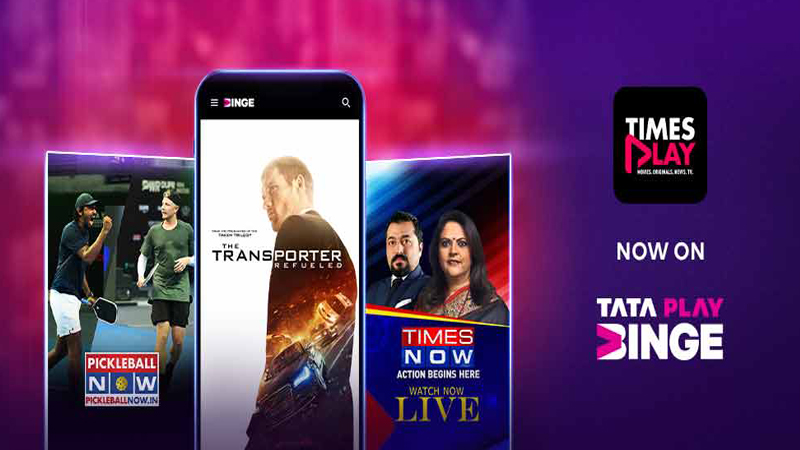
MUMBAI: If streaming had galaxies, Tata Play Binge just opened a wormhole. In its latest move to become India’s most sprawling entertainment universe, the platform has now folded Times Play, Times Network’s digital-first OTT service, into its all-in-one subscription bouquet bringing Hollywood hits, snackable shorts, live news, lifestyle, entertainment, Pickleball and 11 live TV channels under a single roof.
The new addition means subscribers no longer need to hop between apps in Olympic-level finger gymnastics, Binge now pulls Times Network’s entire digital catalogue into one screen, one login, one bill. And in the era of attention overload, that’s practically a public service.
Times Play brings with it a distinctive blend of premium Hollywood cinema, web series, short-format videos, and Times Network’s formidable news muscle. Viewers can flip seamlessly between Romedy Now, Movies Now, MNX, MN+, Zoom, Times Now, Times Now Navbharat, ET Now, ET Now Swadesh, and even Pickleball Now, mirroring the growing Indian appetite for niche sporting entertainment.
On the long-form front, hits like Reunion, India’s Story, True Story of Angeline Jolie, Orphan First Kill, The November Man, Barely Lethal, Southpaw, The Hurt Locker, Transporter Refueled, and The Holiday sit alongside Times Network factual and current-affairs staples including Frankly Speaking, Sawaal Public Ka, and News Ki Paathshaala.
Describing the partnership, Tata Play chief commercial and content officer Pallavi Puri, said the aim remained unchanged to make content discovery effortless and reduce the modern curse of app overload. She noted that integrating Times Play enriches Binge’s already deep catalogue with a broader mix of premium films, originals and news programming “without juggling multiple apps or subscriptions”.
Times Network echoed the sentiment, calling the collaboration a natural extension of its mission to deliver credible entertainment and journalism at scale. It emphasised Tata Play’s reach, reliability and reputation as a key driver in bringing Times Play’s digital catalogue to diverse Indian households.
With the addition of Times Play, Tata Play Binge now boasts 30 plus OTT platforms on a single interface, a list that includes Prime Video, JioHotstar, Zee5, Apple TV+, Lionsgate, SunNXT, Discovery+, BBC Player, Aha, Fancode, ShemarooMe, Hungama, ManoramaMax, Nammaflix, Tarang Plus, Travel XP, Animax, Fuse+, ShortsTV, Curiosity Stream, and DistroTV, among others.
Notably, Netflix remains available as part of combo packs for DTH subscribers, while Amazon Prime Video can be unlocked as an add-on for Binge users with a Tata Play DTH connection. And for large-screen loyalists, all 30 plus apps can be streamed via LG, Samsung and Android Smart TVs, the Tata Play Binge+ set-top box, Amazon FireTV Stick – Tata Play edition, or through TataPlayBinge.com.
The expansion comes on the heels of recent integrations, including WAVES by Prasar Bharati and BBC Player, reinforcing Tata Play Binge’s ambition to remain India’s most diverse, most unified, and most fuss-free entertainment destination.
With Times Play now in the mix, Binge isn’t just aggregating content, it’s quietly aggregating the future of how India watches.


TEST

MIB sets OTT accessibility rules, mandates captions and audio description

Boney Kapoor acquires remake rights of Tamil political satire Thalaivar Thambi Thalaimaiyil

Netflix India names Rekha Rane director of films and series marketing

Zabeen signs off from TV9 after shaping the network’s public voice

Dhawan steps up to bat for Delhi’s grassroots sports push

Orient Beverages pops the fizz with steady Q3 gains and rising profits
MIB sets OTT accessibility rules, mandates captions and audio description

Swiggy Instamart’s GOV surges 103 per cent year on year to Rs 7,938 crore

From selfies to big bucks, India’s influencer economy explodes in 2025

Squadstack AI helps Stage cut calls by 55 per cent and costs by 70 per cent

OpenAI joins C2PA steering committee

TRAI puts a ‘stop’ to unsolicited calls and messages

Kuku TV transforms India’s OTT space with vertical microdrama boom
TEST
MIB sets OTT accessibility rules, mandates captions and audio description
Boney Kapoor acquires remake rights of Tamil political satire Thalaivar Thambi Thalaimaiyil
Netflix India names Rekha Rane director of films and series marketing
Zabeen signs off from TV9 after shaping the network’s public voice
Dhawan steps up to bat for Delhi’s grassroots sports push
Orient Beverages pops the fizz with steady Q3 gains and rising profits
-
 I&B Ministry4 months ago
MIB sets OTT accessibility rules, mandates captions and audio description
-
 News Headline5 months ago
From selfies to big bucks, India’s influencer economy explodes in 2025
-
 e-commerce5 months ago
Swiggy Instamart’s GOV surges 103 per cent year on year to Rs 7,938 crore
-
MAM2 years ago
OpenAI joins C2PA steering committee
-
Digital10 months ago
Squadstack AI helps Stage cut calls by 55 per cent and costs by 70 per cent
-
News Headline1 year ago
TRAI puts a ‘stop’ to unsolicited calls and messages
-
iWorld1 year ago
Kuku TV transforms India’s OTT space with vertical microdrama boom
-

 Brands4 months ago
Page Industries posts steady Q3 growth, declares Rs 125 interim dividend